How Touch and Massage Support Labor Progress
When we think about tools for labor, we often picture movement, breathing, or different positions. But one of the most powerful forms of support is touch.
Whether it is a steady hand on your back, firm counterpressure during a contraction, or gentle massage between waves, touch can play a meaningful role in how labor feels and how your body responds.
Why Touch Matters in Labor
Labor is not just physical—it is neurological and emotional. The way your body interprets sensation is influenced by your environment, your support, and your sense of safety.
Touch helps communicate one very important message to your body: you are not alone, and you are safe.
Encourages Relaxation
Massage and supportive touch help release tension in the body. When muscles relax:
The pelvic floor can soften
Breathing becomes easier
Contractions can feel more manageable
Since tension can work against labor progress, relaxation becomes a key part of helping your body do its job.
Supports Hormone Flow
Labor relies on a balance of hormones, especially oxytocin and endorphins. Positive, reassuring touch can:
Encourage oxytocin release (supporting contractions)
Increase endorphins (your body’s natural pain relief)
On the other hand, stress and fear can increase adrenaline, which may slow labor. Touch helps shift your body back into a calmer, more productive state.
Reduces Perception of Pain
Touch does not remove contractions, but it can change how they are experienced. This is often explained through the idea that the brain can only process so much sensory input at once. When comforting touch is added, it can:
Distract from intensity
Provide competing sensations
Make contractions feel more manageable
This is why techniques like counterpressure or rhythmic massage can be so effective.
Provides Connection
Labor can feel intense and sometimes overwhelming. Touch helps bring you back into the present moment. A steady hand, firm pressure, or familiar contact can:
Help you stay focused during contractions
Offer reassurance without needing words
Create a sense of connection and support
This kind of grounding can be especially helpful during more intense phases of labor.
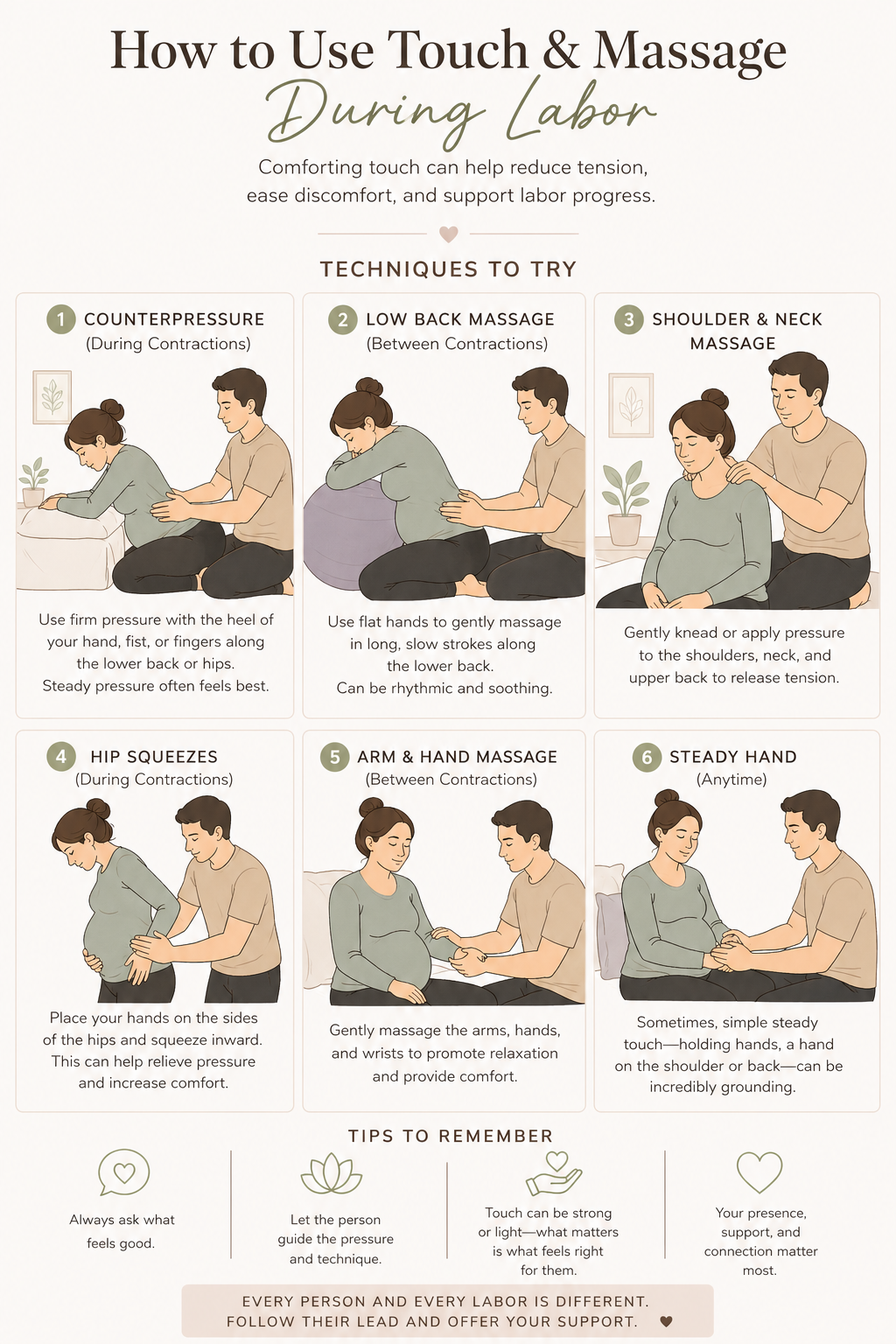
Types of Touch That Can Help in Labor
Different types of touch work for different people—and even for the same person at different points in labor.
Counterpressure
Firm pressure applied to the lower back or hips during contractions.
Especially helpful for back labor.
Light Touch Massage
Gentle strokes on the arms, shoulders, or back.
Often helpful in early labor or between contractions.
Hip Squeezes
Steady inward pressure on the hips.
Can relieve pelvic pressure and increase comfort.
Hand Holding or Steady Contact
Simple, consistent touch—like holding hands or resting a hand on the shoulder.
Provides reassurance and connection.
Shoulder and Neck Massage
Helps release upper body tension, which is often connected to pelvic tension.
Following Your Preferences
Touch is powerful, and it is also personal.
During labor, you may find that you want firm pressure during contractions; you prefer no touch at certain times; or your preferences change as labor progresses. This is completely normal.
The most important thing is that touch feels supportive, not overwhelming. Clear communication with your support person can make a big difference.
The Role of Your Support Person
Partners, doulas, and support people play a key role in offering touch during labor. They do not need to “get it perfect.” What matters most is:
Being responsive to your cues
Adjusting pressure or technique as needed
Staying present and attentive
Touch and massage are not complicated techniques. They are natural, intuitive ways of supporting the body during an intense experience.
They can:
Encourage relaxation
Support hormone flow
Reduce discomfort
Create connection and safety
In a time when words may feel like too much, touch often says everything that needs to be said. And sometimes, that quiet, steady support is exactly what helps labor move forward.