Using a Birth Ball During Pregnancy and Labor
A birth ball might look simple, but it can become one of the most versatile and helpful tools during both pregnancy and labor. Whether you are easing discomfort in the third trimester or working through contractions, a birth ball supports your body in ways that are gentle, natural, and effective.
What Is a Birth Ball?
A birth ball is similar to a large exercise ball, designed to support your body during pregnancy, labor, and even postpartum recovery.
When used correctly, it helps:
Encourage better posture
Reduce pressure on the lower back and hips
Promote gentle movement and flexibility
It becomes a tool that allows your body to stay mobile and supported at the same time.
Benefits of Using a Birth Ball During Pregnancy
As your body changes, it is common to experience discomfort, especially in the lower back, hips, and pelvis. A birth ball can help relieve some of that strain.
Improves Posture
Sitting on a birth ball naturally encourages you to sit upright instead of slouching. This can reduce back pain and support better alignment as your belly grows.
Relieves Pressure and Discomfort
Gentle bouncing or rocking can help ease lower back tension, reduce hip tightness, and take pressure off the pelvis. It provides movement without strain.
Encourages Optimal Baby Positioning
Spending time upright and slightly forward on a birth ball can help create space in the pelvis and encourage baby into a favorable position for birth.
Promotes Gentle Movement
Even small movements—like circles or swaying—help keep your body flexible and responsive, which can be beneficial as you prepare for labor.
How to Use a Birth Ball During Pregnancy
You can incorporate the ball into your daily routine in simple ways:
Sit on it instead of a chair for short periods
Gently rock side to side
Make slow circles with your hips
Lean forward onto the ball while kneeling to relieve back pressure
There’s no “perfect” routine, just consistent, gentle use.
Benefits of Using a Birth Ball During Labor
During labor, the birth ball becomes even more valuable.
Supports Movement and Mobility
Labor progresses best when your body can move freely. A birth ball allows you to sway, rock, and change positions easily.
Helps Manage Contractions
The gentle motion of rocking or bouncing can reduce tension, help you stay focused, and make contractions feel more manageable. Movement gives your body something to do during each wave.
Uses Gravity to Your Advantage
Sitting upright or leaning forward on the ball helps gravity assist in bringing baby down into the pelvis.
Eases Back Labor
Leaning forward onto the ball (on a bed or while kneeling) can relieve pressure in the lower back, especially helpful if you are experiencing back labor.
Positions to Try During Labor
Here are a few common and effective ways to use a birth ball:
Sitting and rocking: Sit upright and gently sway or circle your hips
Leaning forward: Rest your upper body on the ball while kneeling or standing
Partner support: Lean onto the ball while your partner applies counterpressure to your back
Side-leaning rest: Use the ball for support while resting between contractions
Switching positions regularly can help keep labor progressing and reduce discomfort.
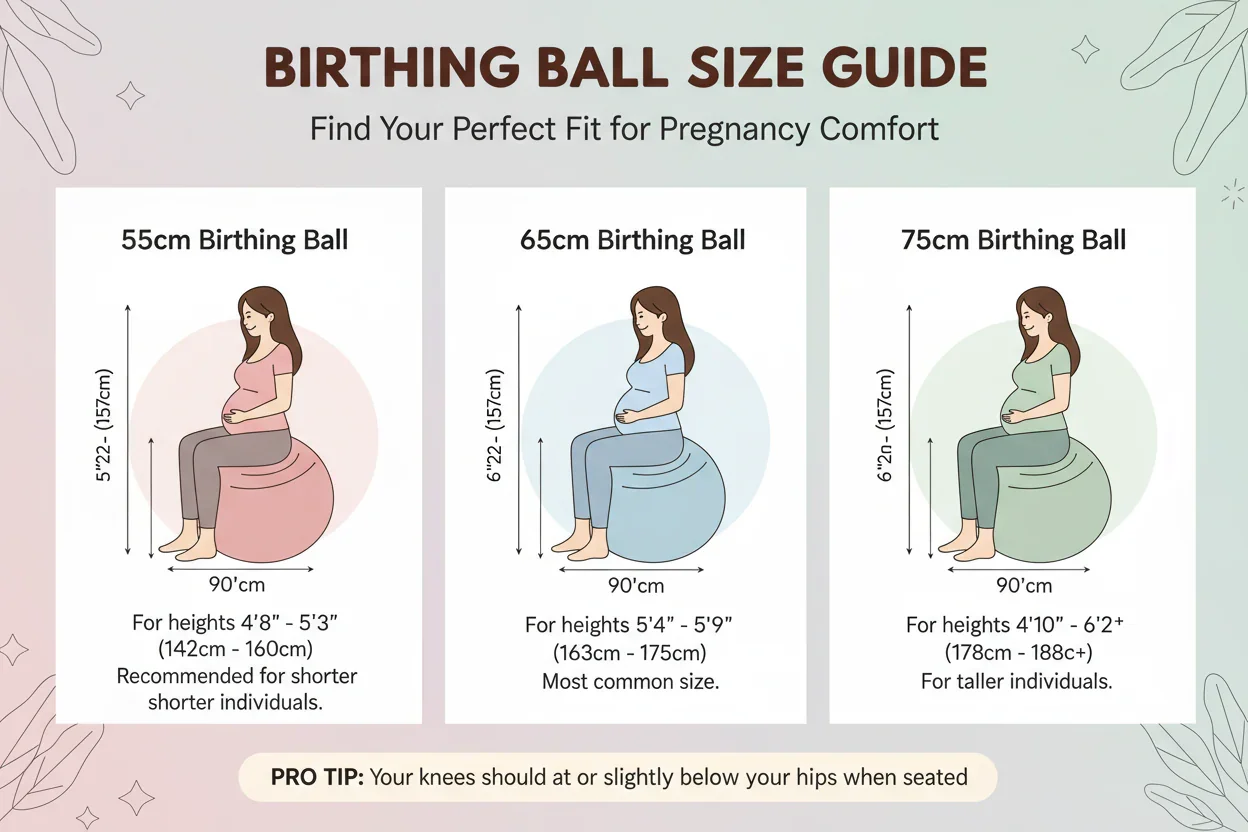
Choosing the Right Size Ball
Using the correct size is important for comfort and safety.
As a general guide:
When sitting on the ball, your knees should be slightly lower than your hips
Your feet should be flat on the ground
You should feel stable, not like you are balancing
Most people use a 65–75 cm ball, depending on height.
Safety Tips
Use the ball on a non-slip surface
Have someone nearby if you feel unsteady
Avoid excessive bouncing—gentle movement is enough
Take breaks if you feel tired
The goal is support, not strain
A birth ball is a simple yet effective tool that can make a meaningful difference during both pregnancy and labor. It encourages movement, supports comfort, and helps your body work in a more natural rhythm—all without needing complicated techniques or equipment.