Understanding Common Hospital Birth Interventions
For many families, giving birth in a hospital provides a sense of safety, support, and access to medical care when needed. Hospitals can offer incredible resources during labor and delivery, but they also often involve procedures and interventions that may be unfamiliar if you are preparing for birth for the first time.
Learning about common hospital birth interventions ahead of time can help you feel more informed, confident, and prepared to make decisions during labor.
Interventions are not automatically “good” or “bad.” In many situations, they can be incredibly helpful and medically necessary. The goal is simply to understand what they are, why they may be recommended, and what options you may have along the way.
What Is a Birth Intervention?
A birth intervention is any medical procedure, medication, or technique used to monitor, support, speed up, or manage labor and delivery. Some interventions are routine in certain hospitals, while others are only used when medically indicated. Understanding them before labor can help reduce fear and allow you to ask informed questions if decisions arise during birth.
IV Fluids
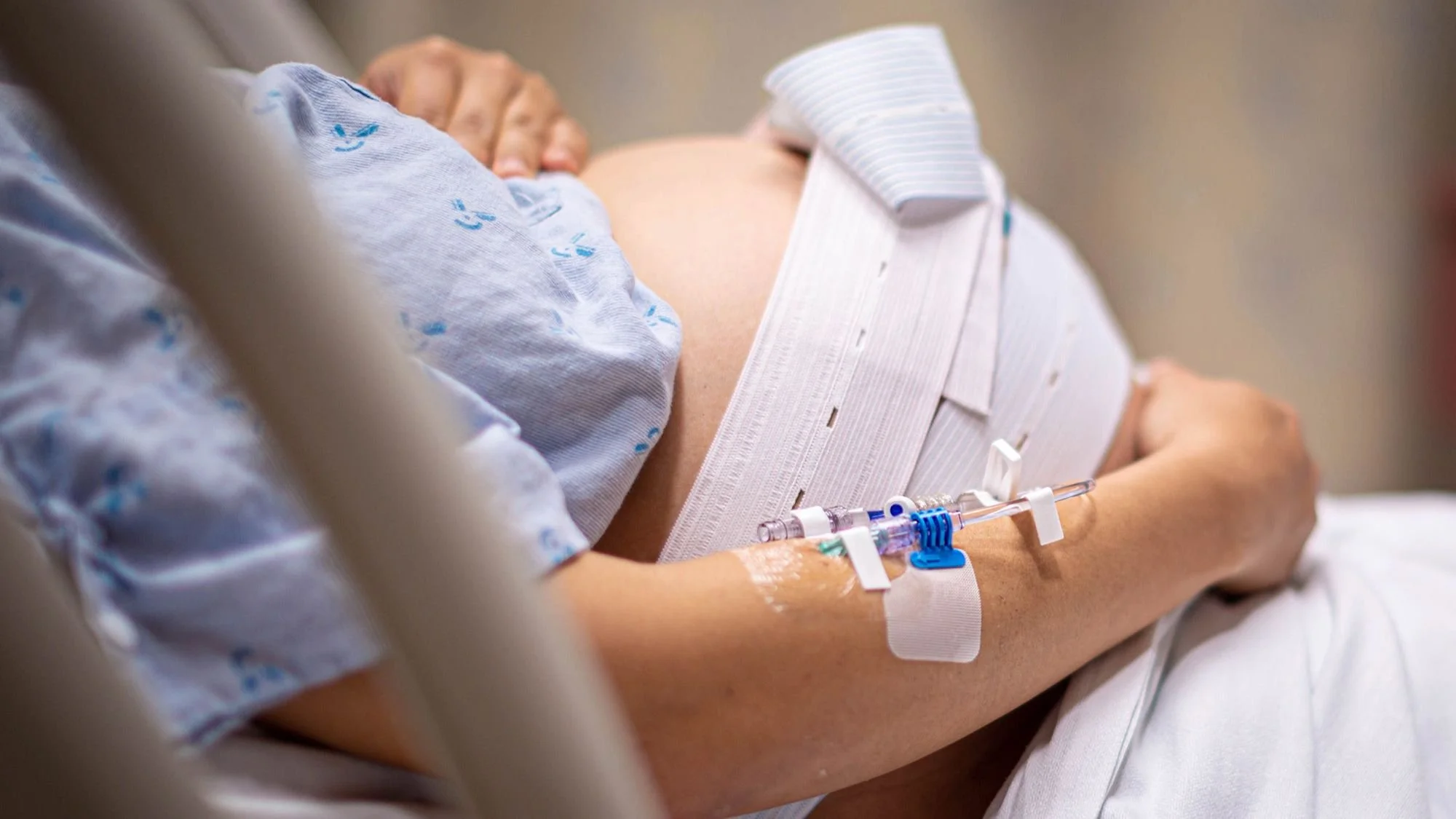
Many hospitals place an IV shortly after admission; some places even require it. This is usually for hydration during labor, access for medications if needed, or quick response in emergencies. Having an IV does not always mean you must stay in bed. In many cases, intermittent monitoring or a saline lock can still allow movement during labor.
Continuous Fetal Monitoring
Fetal monitoring tracks your baby’s heart rate and your contractions. There are two types:
Intermittent monitoring: Checked periodically
Continuous monitoring: Monitors remain on throughout labor
These are used during labor for epidural placement, induction or Pitocin use, high-risk pregnancies, and concerns about baby’s well-being. Continuous monitoring can sometimes limit mobility, but many hospitals now offer wireless monitoring options.
Labor Induction
An induction is when labor is started medically rather than beginning on its own. This is typically due to going significantly past due date, high blood pressure or medical concerns, concerns about baby’s health, or water breaking without contractions starting.
The most common methods used are cervical ripening medications, foley balloon catheter, Pitocin, or breaking the water (amniotomy).
Induction experiences vary widely, and it’s okay to ask questions about timing, risks, benefits, and alternatives.
Pitocin
Pitocin is a synthetic form of oxytocin used to induce or strengthen contractions. It is recommended for labor induction, labor augmentation if contractions slow down, and to reduce bleeding after birth.
Pitocin contractions usually feel stronger or closer together than spontaneous contractions, so additional support measures may become especially helpful.
Epidural
An epidural is a form of pain relief administered through the spine. This tool can be beneficial to help with significant pain relief and can allow rest during long labors. When receiving an epidural, there are things to consider:
Movement may become more limited
A urinary catheter is often placed
Continuous monitoring is usually required
Many people still use movement, position changes, and peanut balls with an epidural. This does not mean you cannot move at all. Using an epidural does not make you less of a person either.
Breaking the Water (Amniotomy)
This procedure uses a small tool to rupture the amniotic sac. Your provider may use this tool to encourage labor progression, to place internal monitors, and during induction. Once the water is broken, labor may intensify, and there can be increased pressure for labor to continue progressing steadily.
Assisted Delivery
Sometimes additional assistance is needed during the pushing stage. Some examples of this may include:
Vacuum-assisted delivery
Forceps-assisted delivery
These tools may be recommended if the baby needs to be born more quickly, pushing has been prolonged, or there are concerns about exhaustion or fetal distress.
Cesarean Birth
A cesarean section (C-section) is a surgical birth through the abdomen and uterus. Some common reasons a C-section is needed are:
Baby positioning concerns
Labor not progressing
Fetal distress
Placenta complications
Medical emergencies
Some cesareans are planned, while others become necessary during labor. Even when birth does not go as expected, families still deserve compassionate, informed support throughout the experience.
Informed Decision-Making Matters
One of the most important things to remember is that you have the right to ask questions and understand your options.
A helpful tool many families use is the BRAIN acronym:
Benefits
Risks
Alternatives
Intuition
Nothing (What happens if we wait?)
You do not have to navigate these conversations alone. Your provider, partner, and doula can help support you as decisions arise.
Birth Support Can Make a Difference
Hospital birth can sometimes feel overwhelming with monitors, procedures, and unfamiliar terminology. Having continuous support during labor can help you:
Feel calmer and more informed
Understand what is happening
Stay grounded during decision-making
Maintain comfort and movement as much as possible
Support does not remove interventions—but it can help you feel more confident and cared for throughout the process.
Hospital birth interventions are common, and many can play an important role in keeping moms and babies safe. Understanding them ahead of time can help reduce fear and allow you to approach birth with greater confidence and clarity.
Birth rarely unfolds exactly according to plan, but being informed, supported, and empowered can make a meaningful difference in how you experience your labor and delivery journey.