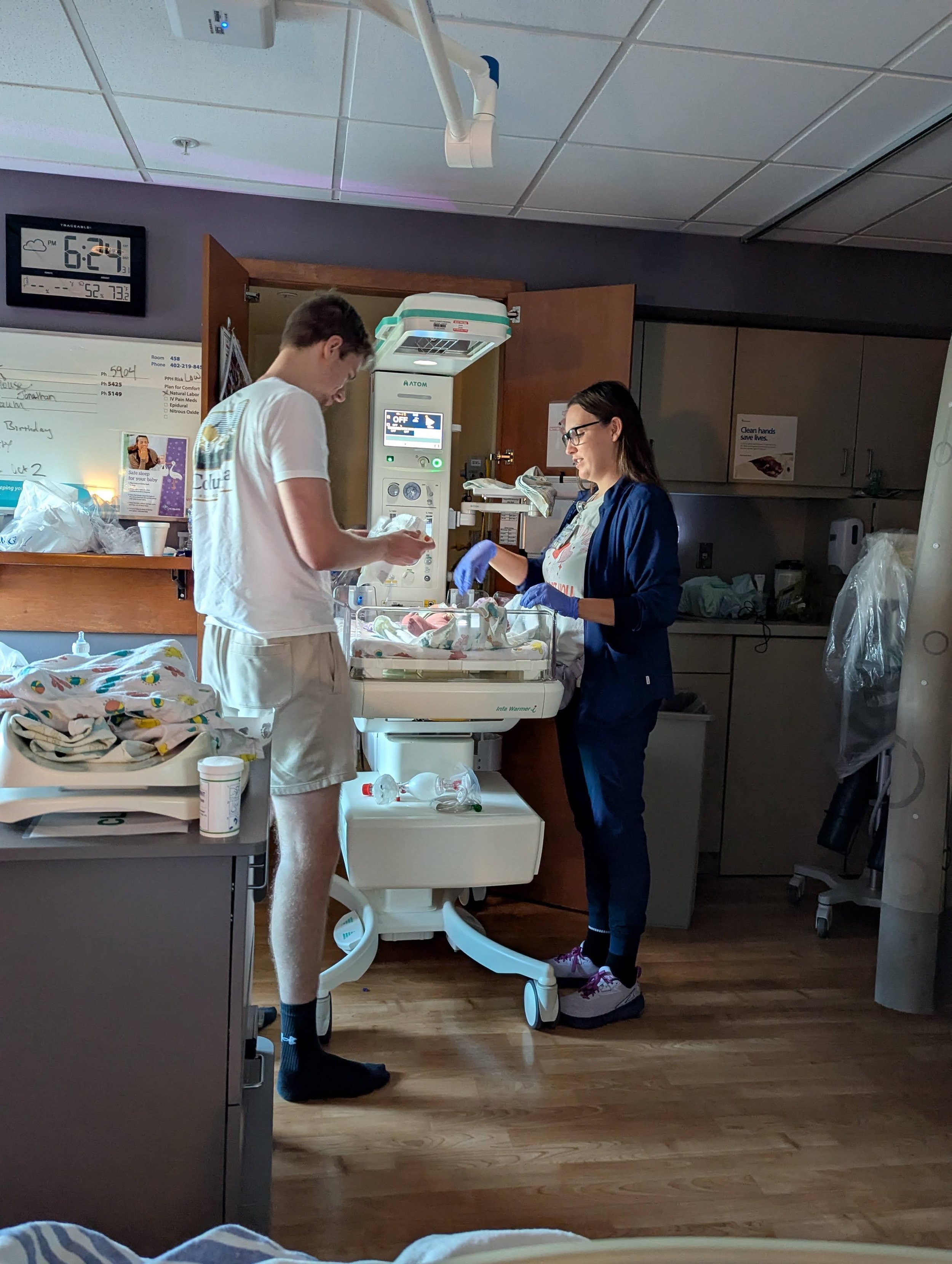
Who’s Who in the Birth Room? Understanding Your Care Team
Preparing for birth often comes with a lot of questions—especially when it comes to who will actually be in the room during labor and delivery. Between nurses, providers, doulas, and hospital staff, it can sometimes feel overwhelming trying to understand everyone’s role.
Knowing who is part of your care team can help you feel more comfortable, informed, and confident as you prepare for birth. Every birth setting is a little different, but here is a general guide to the people you may see supporting you during labor, delivery, and postpartum.
Obstetrician (OB)
An obstetrician, or OB, is a medical doctor trained in pregnancy, labor, birth, and postpartum care. They typically:
Monitor medical aspects of pregnancy and labor
Manage complications or high-risk situations
Perform medical procedures and cesarean births
Deliver the baby in many hospital settings
In many hospital births, your OB may not be present the entire labor and may come in closer to delivery or if medical decisions are needed.
Midwife
A midwife is a trained healthcare professional who specializes in pregnancy, birth, and postpartum care. They typically focus on:
Supporting physiologic birth
Providing personalized care and education
Monitoring mom and baby during labor
Delivering babies in hospitals, birth centers, or homes (depending on credentials and setting)
Many families appreciate the relationship-centered care midwives often provide.
Labor & Delivery Nurse
Your labor and delivery nurse is often one of the people you spend the most time with during birth. Nurses play a huge role in helping labor run smoothly and safely. Their role includes:
Monitoring contractions and baby’s heart rate
Administering medications
Helping with labor positions and comfort
Communicating with your provider
Supporting you emotionally throughout labor
Doula
A doula is a non-medical support person trained to provide emotional, physical, and educational support during pregnancy, labor, and postpartum. A doula may help with:
Comfort measures and labor positions
Encouragement and reassurance
Creating a calm birth environment
Supporting your partner
Helping you understand your options
Unlike medical providers, doulas do not perform clinical tasks or make medical decisions. Instead, they focus entirely on supporting you and your experience throughout labor.
Anesthesiologist or CRNA
If you choose or need an epidural, you may meet an anesthesiologist or Certified Registered Nurse Anesthetist (CRNA). They are focused specifically on pain management and anesthesia care by:
Administering pain management medications
Monitoring your comfort and safety during epidural use
Adjusting medication as needed
Pediatrician or Neonatal Team
After birth, a pediatrician or neonatal team may assess your baby. They may:
Check baby’s breathing, heart rate, and reflexes
Provide care if extra support is needed
Assist during higher-risk births or NICU situations
In uncomplicated births, their role may be brief and routine, generally leading to them leaving shortly after the baby’s checks.
Postpartum Nurses
Once your baby arrives, postpartum nurses help care for both you and your newborn. They often assist with:
Recovery after birth
Breastfeeding support
Newborn care education
Monitoring healing and vital signs
These nurses help guide families through those first hours and days after delivery.
Your Partner or Support Person
Your partner or chosen support person is an important part of the birth team too. They may provide:
Emotional reassurance
Physical comfort
Advocacy and encouragement
A familiar, grounding presence during labor
Birth support works best when everyone works together as a team.
You
One of the most important things to remember is this: you are not just a patient—you are an active part of your care team.
Your preferences, questions, intuition, and decisions matter.mYou always have the right to:
Ask questions
Understand your options
Express your preferences
Be involved in decisions about your care
Why Understanding Your Care Team Matters
Knowing who is in the room and what each person does can:
Reduce fear and uncertainty
Help you communicate more confidently
Create realistic expectations for labor
Allow you to feel more prepared and supported
Birth can feel much less overwhelming when you understand the roles of the people around you. Each person has a different role, but the goal is the same: supporting a safe, supported, and positive birth experience.